Biography
From Wikipedia, the free encyclopedia. Karl W. Freund, A.S.C. (January 16, 1890-May 3, 1969) was a cinematographer and film director. Born in Dvůr Králové (Königinhof), Bohemia, his career began in 1905 when, at age 15, he got a job as an assistant projectionist for a film company in Berlin where his family moved in 1901. He worked as a cinematographer on over 100 films, including the German Expressionist films The Golem (1920), The Last Laugh (1924) and Metropolis (1927). Freund emigrated to the United States in 1929 where he continued to shoot well remembered films such as Dracula (1931) and Key Largo (1948). He won an Academy Award for Best Cinematography for The Good Earth (1937). In 1937, he went to Germany to bring his only daughter, Gerda Maria Freund, back to the United States, saving her from almost certain death in the concentration camps. Karl's ex-wife, Susette Freund (née Liepmannssohn), remained in Germany where she was interned at the Ravensbrück concentration camp and eventually taken in March, 1942 to Bernburg Euthanasia Center where she was murdered. Between 1921 and 1935, Freund also directed ten films, of which the best known are probably The Mummy (1932) …
Movies & TV Shows
-
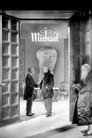 Michael (1924) — LeBlanc - Art Dealer
- You Can't Fool a Camera (1941) — Himself
- German Film Award (1951) — Self