Biography
Humberto Ríos (1929–2014) was born in La Paz, Bolivia, on November 30, 1929. He was a Bolivian film director and documentarian who died in Buenos Aires, Argentina, on November 8, 2014. In the 1950s he traveled to France, initially intending to work in his original profession as a painter and set designer, but the creative energy of the nouvelle vague drew him into cinema, and he went on to study at IDHEC, where he crossed paths with figures like Costa-Gavras, Manuel Michel and Salvador Elizondo. While in Paris, he also became involved with a clandestine network of activists opposing the Algerian War, helping route funds to Switzerland for the cause — and was among the few members of that cell who avoided imprisonment. In 1960 he relocated to Buenos Aires, with help from Argentine TV director María Herminia Avellaneda, and settled permanently in Argentina. There he worked as a cameraman for Argentinian filmmaker Raymundo Gleyzer and became one of the key figures of militant, socially engaged Latin American cinema. His best-known works include: Eloy (1969), an Argentine-Chilean co-production based on Carlos Droguett's novel, which screened at the Berlin Film Festival; Al grito de …
Directed
-
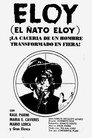 Eloy (1969) — Director
-
 Argentina, mayo de 1969. Los caminos de la liberación (1969) — Director
-
 Faena (1961) — Director
- Del Viento y del Fuego (1983) — Director
-
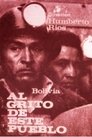 Al grito de este pueblo (1972) — Director
-
 This Voice Among Many (1979) — Director
- Fernando Birri, el utópico andante (2012) — Director
- Jorge Prelorán, el cine de un humanista (2007) — Director