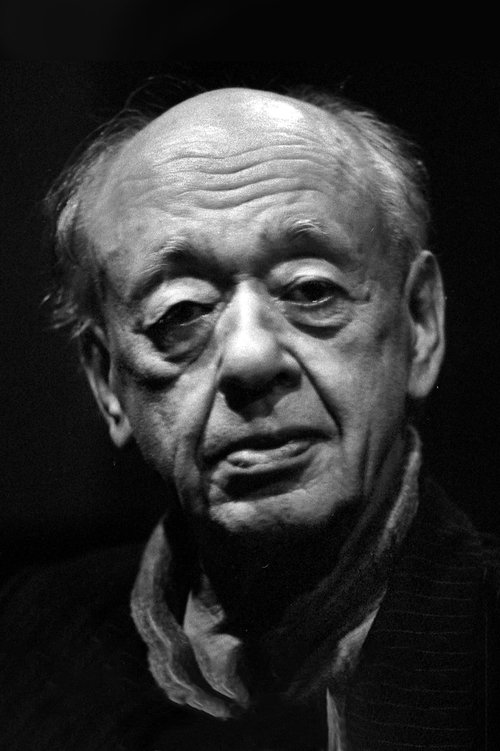
Biography
Eugène Ionesco (born Eugen Ionescu, 26 November 1909 – 28 March 1994) was a Romanian-French playwright who wrote mostly in French, and was one of the foremost figures of the French avant-garde theatre in the 20th century. Ionesco instigated a revolution in ideas and techniques of drama, beginning with his "anti play", The Bald Soprano which contributed to the beginnings of what is known as the Theatre of the Absurd, which includes a number of plays that, following the ideas of the philosopher Albert Camus, explore concepts of absurdism. He was made a member of the Académie française in 1970, and was awarded the 1970 Austrian State Prize for European Literature, and the 1973 Jerusalem Prize. Ionesco was born in Slatina, Romania, to a Romanian father belonging to the Orthodox Christian church and a mother of French and Romanian heritage, whose faith was Protestant (the faith into which her father was born and to which her originally Greek Orthodox Christian mother had converted). Eugène was baptized into the Orthodox Christian faith. Many sources cite his birthdate as 1912, this error being due to vanity on the part of Ionesco himself, who wanted the year of his birth to coincide wi…
Movies & TV Shows
-
 Monsieur Tête (1959) — Narrator
-
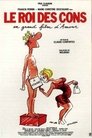 Le Roi des cons (1981) — Le pharmacien
-
 Sacrée soirée (1987) — Self
-
 Apostrophes (1975) — Self
-
 Cinépanorama (1956) — Self
-
 30 millions d'amis (1976) — Self
-
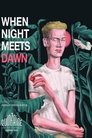 When Night Meets Dawn (2021)
-
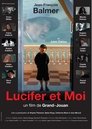 Lucifer et moi (2009) — (archive footage 1982)
- Françoise et Udo... (1968) — Self
-
 Eugène Ionesco, voix and silences (1987) — Self
- The Battle for 'I Am Curious-Yellow' (2003) — Self (archive footage)
-
 Midi trente (1972) — Self
- Festival (1963) — Self - Introduction
- Schlamm (1970)
-
 Ariane (1974) — Minos
-
 Tales for children under three (1989) — Self
- Studio III - Aus Kunst und Wissenschaft (1965) — Self
-
 Pour le plaisir (1964) — Self